
Roof installation project cost sets the stage for this enthralling narrative, offering readers a glimpse into a story that is rich in detail and brimming with originality from the outset. The intricacies of factors affecting the cost, breakdown of expenses, tips to save money, and comparisons of roofing materials await your exploration.
Delve deeper into the world of roof installation project costs and discover valuable insights that can help you make informed decisions for your next roofing project.
Factors Affecting Roof Installation Project Cost
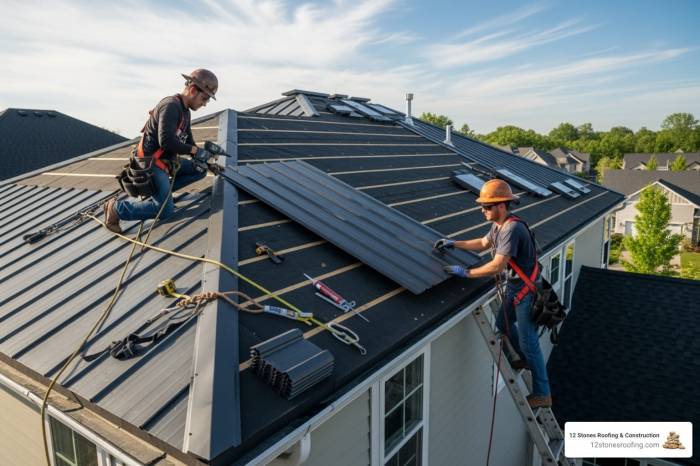
When considering the cost of a roof installation project, several factors come into play. The size of the roof, the choice of materials, and the complexity of the design all have a significant impact on the overall cost.
Size of the Roof
The size of the roof is one of the primary factors that influence the cost of a roof installation project. Larger roofs require more materials, labor, and time to complete the installation, leading to higher overall costs. Additionally, larger roofs may require specialized equipment or additional safety measures, further increasing the project cost.
Roof Material Choice
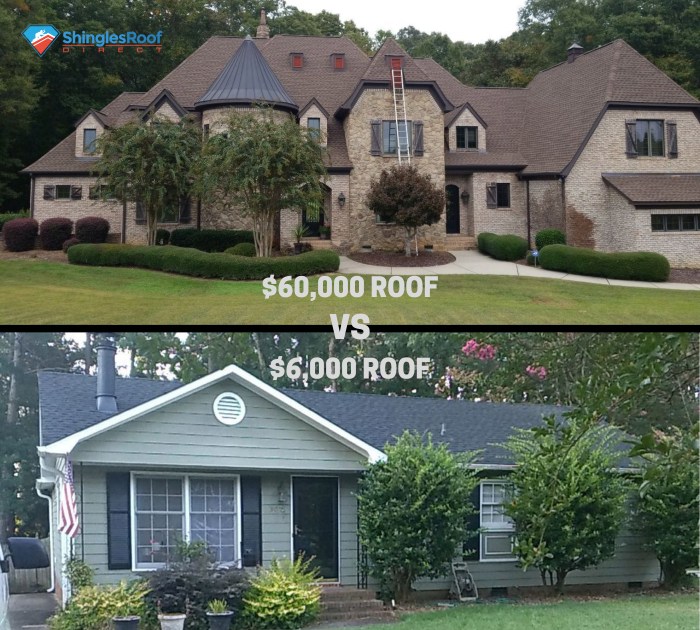
The choice of materials for the roof also plays a crucial role in determining the installation cost. Different roofing materials vary in price, with some options being more expensive than others. For example, high-end materials like slate or metal will cost more than asphalt shingles.
The quality and durability of the chosen material will also impact the long-term maintenance and replacement costs of the roof.
Complexity of the Roof Design
The complexity of the roof design can significantly affect the total cost of the installation project. Roof designs with multiple angles, slopes, or unique features require more time and expertise to install properly. This complexity can increase labor costs and may require specialized techniques or additional materials, driving up the overall project cost.
It is essential to consider the design complexity when budgeting for a roof installation project to avoid unexpected expenses.
Cost Breakdown of Roof Installation
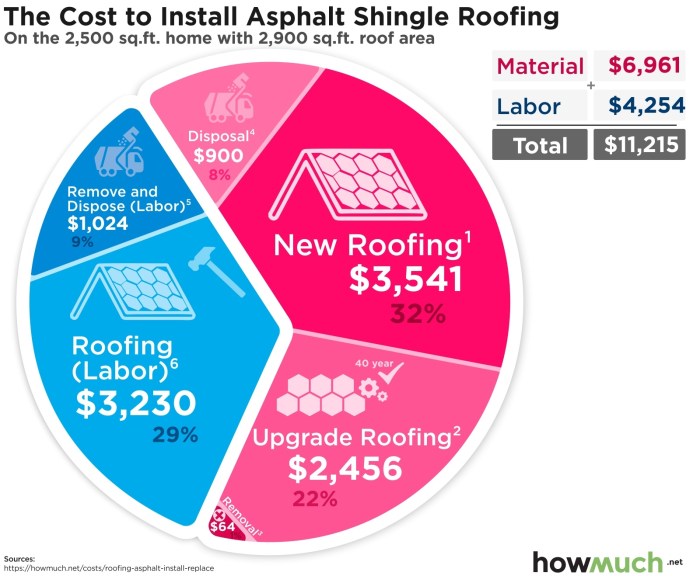
When it comes to the cost breakdown of a roof installation project, there are several key components that contribute to the total cost. These components include labor, materials, permits, and other additional costs that homeowners might overlook. Furthermore, the location of the property can also have a significant impact on the overall cost of the project.
Labor Costs
Labor costs are a significant portion of the total cost of a roof installation project. This includes the cost of hiring skilled workers to install the roof, as well as any subcontractors that may be needed for specific tasks.
Materials
The cost of materials is another major factor in the total cost of a roof installation project. This includes the price of the roofing materials themselves, as well as any additional materials needed for the installation process, such as nails, sealants, and underlayment.
Permits and Inspections
Homeowners often overlook the cost of permits and inspections when budgeting for a roof installation project. Depending on the location, permits may be required before work can begin, and inspections may be necessary throughout the process to ensure the roof meets building codes.
Additional Costs
In addition to the main components mentioned above, there are several other costs that homeowners might overlook during a roof installation project. These can include disposal fees for removing old roofing materials, the cost of renting equipment, and unforeseen repairs that may be needed once the project is underway.
Location of the Property
The location of the property can also influence the overall cost of a roof installation project. Factors such as accessibility, local labor rates, and building code requirements can all impact the total cost. For example, properties in remote areas may incur higher labor costs due to transportation expenses, while properties in areas with strict building codes may require additional materials or labor to meet those requirements.
Tips to Reduce Roof Installation Project Cost
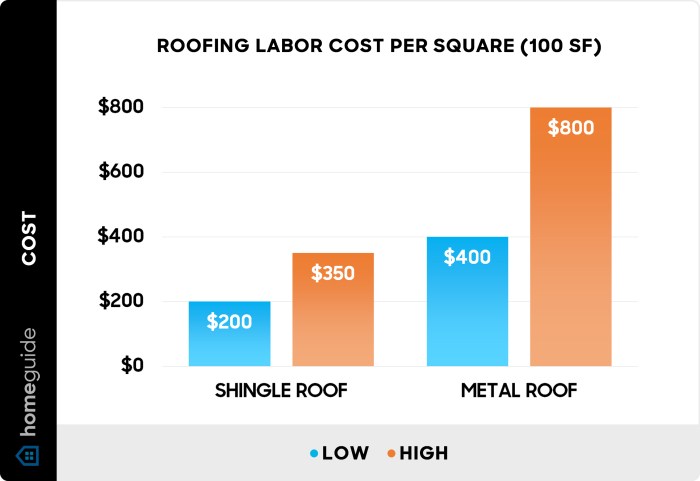
When looking to reduce the cost of a roof installation project, there are several strategies that homeowners can consider. From negotiating with contractors to scheduling the project during off-peak seasons, there are ways to save money without compromising on quality.
Additionally, exploring DIY options can also help cut down on installation costs.
Negotiating with Contractors
One effective way to reduce the cost of a roof installation project is to negotiate with contractors for a better deal. Homeowners can request quotes from multiple contractors and use these estimates to leverage a lower price. Additionally, discussing the scope of work and materials with the contractor can help identify areas where costs can be reduced without sacrificing the quality of the installation.
Scheduling During Off-Peak Seasons
Scheduling the roof installation project during off-peak seasons can also result in cost savings. Contractors are typically less busy during certain times of the year, which may lead to lower labor costs. By planning the project during these times, homeowners can potentially secure a better rate for the installation.
Exploring DIY Options
For homeowners with some level of skill and experience, exploring DIY options can be a cost-effective way to reduce the overall project cost. Tasks such as removing the old roof materials, preparing the roof deck, or even simple repairs can be tackled by homeowners themselves, saving on labor costs.
However, it is essential to assess one's abilities and consult with professionals for complex tasks to ensure the safety and quality of the installation.
Comparing Roof Installation Costs by Roofing Material
When it comes to choosing the right roofing material for your project, cost is a significant factor to consider. Different roofing materials come with varying price tags, and it's essential to understand the cost implications before making a decision.
Asphalt Shingles
Asphalt shingles are one of the most popular and affordable roofing materials on the market. They are relatively easy to install, which can help reduce labor costs. However, they may not be as durable as other materials and may require more frequent maintenance and replacement over time.
Metal Roofing
Metal roofing is known for its longevity and durability. While the initial cost of metal roofing may be higher than asphalt shingles, it can last much longer with minimal maintenance. This can result in long-term cost savings and fewer replacements over the years.
Tile Roofing
Tile roofing is a durable and aesthetically pleasing option but tends to come with a higher price tag compared to asphalt shingles or metal roofing. However, the longevity of tile roofing can offset the initial cost, as it can last for decades with proper maintenance.
Wood Shingles
Wood shingles provide a natural and rustic look to a home but may require more maintenance and care compared to other materials. While the initial cost of wood shingles may be moderate, the long-term maintenance and potential for damage from pests or weather conditions should be taken into consideration.
Closure
As we draw the curtains on this discussion, remember that understanding the nuances of roof installation project cost can empower you to make cost-effective choices for your home. Armed with knowledge, you can embark on your roofing journey with confidence and clarity.
Top FAQs
How does the size of the roof impact the project cost?
The larger the roof, the more materials and labor are required, leading to higher costs.
Are there any additional costs homeowners tend to overlook during a roof installation project?
Homeowners might overlook costs for roof accessories, disposal of old materials, or potential structural repairs.
What are some DIY options to reduce installation costs?
DIY tasks like cleaning the roof beforehand or assisting with material preparation can help cut down on labor costs.